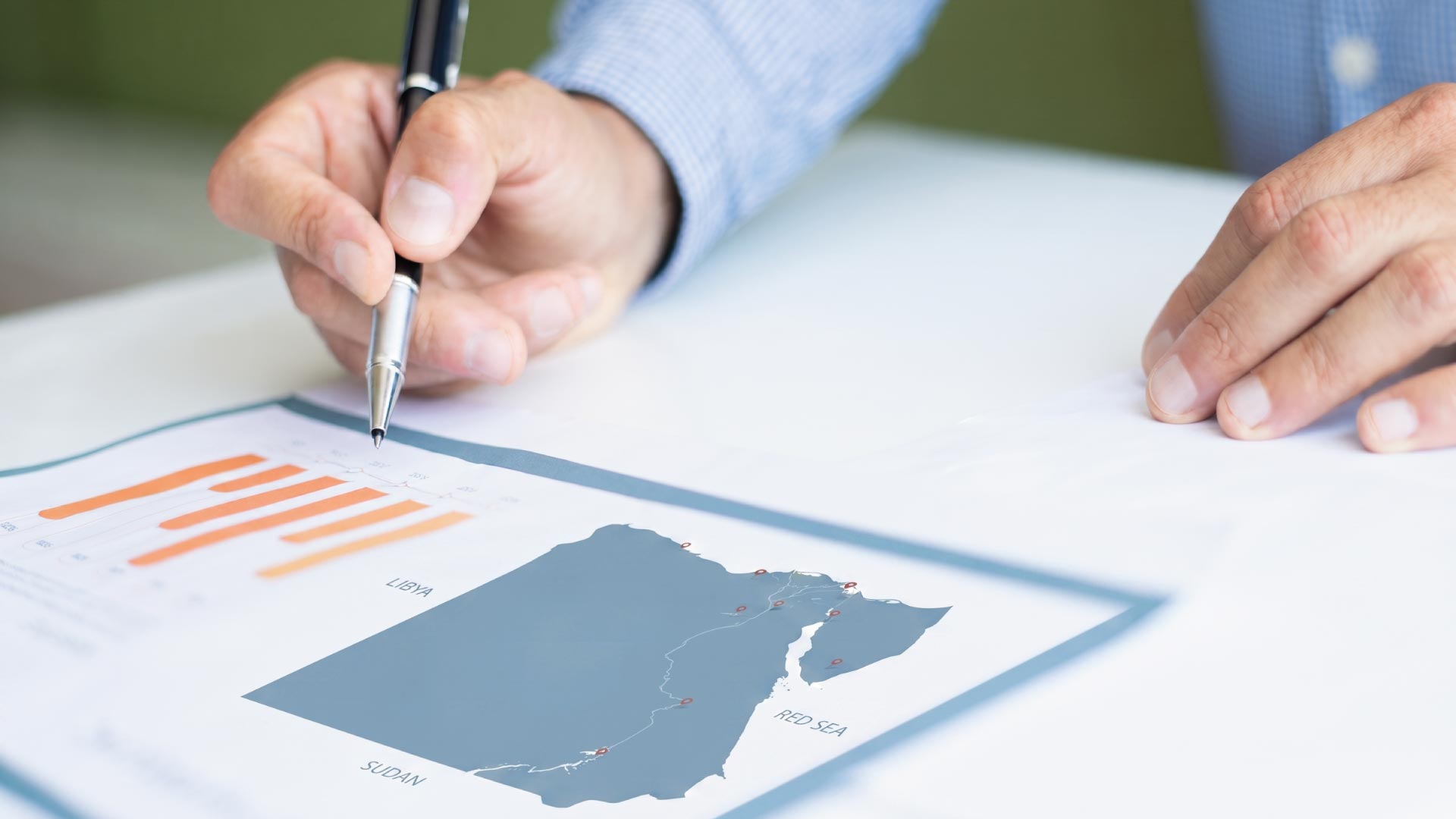
At NHG Experts for Business Development, we recognize that the fuel crisis in Egypt is no longer an isolated economic event. It has become a structural signal that reflects the deep interconnection between energy, geopolitics, and foreign trade. Understanding its implications for investment and expansion decisions requires a comprehensive reading that links energy shocks with local and regional market dynamics.
Why the fuel crisis in Egypt Is No Longer a Routine Price Hike

Why Imported Gas Has Become a Growing Burden on the State Budget
In March 2026, Egypt raised petroleum product prices by up to 17%, a decision driven by factors far deeper than global oil price movements. Since Israel suspended gas exports to Egypt, amounting to approximately 1.1 billion cubic feet per day, Cairo turned to LNG imports through shipments worth around $3.75 billion, and leased five floating regasification units at Ain Sokhna. This shift from gas tied to bilateral agreements toward spot-market LNG imports sharply raised Egypt’s imported energy bill and put simultaneous pressure on the state budget and foreign currency reserves. The fuel crisis, therefore, is not a crisis at the gas station; it is a full-scale energy model crisis that requires structural overhaul. We study carefully what is the link between the gas crisis and rising fuel prices in Egypt.
Book a strategic consultation to assess the crisis’s impact on your investment project. Contact us on WhatsApp: 01555388736
How the Gas Crisis Linked Energy to Imported Inflation in Egypt
How Fuel Price Increases Quickly Pass Through to Goods and Services
The gas crisis in Egypt does not stop at the electricity sector; it quickly seeps into industrial operating costs, transportation, food, and services. When the energy bill rises, imported inflation rises with it, as production inputs become more expensive and those costs are ultimately passed on to the end consumer. Egypt’s oil trade balance deficit widened to $13.9 billion in FY 2024/2025, while petroleum imports climbed to $19.5 billion. This pressure on Egypt balance of payments weakens the economy’s ability to absorb external shocks and makes the fuel crisis a direct driver of eroding purchasing power for households and businesses alike. At NHG Experts for Consulting, we measure these impacts within sensitivity analysis models for feasibility studies. You can explore our services at nhgexperts.com/en
Request a feasibility study that accounts for energy and shipping scenarios in Egypt. WhatsApp: 01555388736
You can also read:
- Investment opportunities with a financial consulting office
- Opportunities for foreign investor in Saudi Arabia
- Analysis of the fuel crisis in Egypt
How Red Sea Disruptions Are Affecting the Suez Canal and Foreign Currency
Which Sectors Are Most Exposed to Energy Risks in Egypt Today
Red Sea disruptions are compounding the effects of the fuel crisis through two parallel channels. The first is a sharp rise in shipping and insurance costs on Egyptian imports, with war risk insurance premiums jumping by more than 1,000% in some cases. The second is a decline in Suez Canal revenues, which lost around $7 billion in 2024 as shipping was rerouted away from the waterway. The impact also extends to Egypt tourism sector and foreign trade. Remittances from Egyptians abroad reached $41.5 billion in 2025 despite the risks, but remain vulnerable to any further Gulf escalation. Egyptian energy security is directly tied to these sensitive maritime corridors. We are of the impact of Red Sea disruptions on Egypt’s economy and investment.
How Gulf Investors Read Egypt’s Economic Resilience Indicators
Does Egypt’s energy crisis threaten Gulf company expansion ? The gas crisis in Egypt casts a direct shadow on Gulf expansion risks in the Egyptian market. When the petrol and diesel crisis deepens, and shipping bills escalate, profit margins erode in energy-intensive sectors such as industry, transportation, and agriculture. This makes energy consumption efficiency and cost assumption reviews a necessity, not a luxury, in any new feasibility study. At NHG Experts for Economic Consulting, we know How Egypt fuel crisis affects investor decisions. We work with Gulf companies to build financial models that factor in rising fuel prices in Egypt, shipping scenarios, and energy fluctuations, as part of a comprehensive analysis that measures Egyptian economic resilience against external shocks. We also assess the regasification infrastructure and its effect on operating costs across different sectors.
Strategic Alternatives to Strengthen Energy Security and Reduce Risks
Why Companies Need Feasibility Studies Sensitive to Energy Fluctuations
Strengthening energy security in Egypt requires working on four parallel tracks: diversifying gas suppliers to reduce dependence on a single source; accelerating domestic field development to raise self-sufficiency rates; expanding the regasification infrastructure to accommodate larger LNG shipments; and implementing effective policies for energy demand management in both the industrial and residential sectors. For companies and investors, how can companies build feasibility plans under energy risk conditions ? The fuel crisis in Egypt demands a serious reassessment of regional geopolitical risks and their explicit inclusion in business plans. The impact of fuel on Egypt economy also extends to energy demand management, making it essential for companies to revisit their operational assumptions. By the team at NHG Experts for Business Development, specialists in economic consulting and strategic feasibility studies.
Start with NHG Experts. Build a Gulf expansion plan that’s more resilient to risk. WhatsApp: 01555388736
You can also read:
- The difference between feasibility studies and business plans
- Impact of regional geopolitical tensions on Gulf investment
- Fuel pricing in Egypt and its effect on investment
Conclusion:
The fuel crisis in Egypt is not an isolated event; it is an expression of the deep entanglement of energy factors, geopolitics, and Egyptian energy security pressures. Any investor or company that overlooks these variables when planning for feasibility and expansion will face costs they never accounted for. At NHG Experts for Business Development, we deliver integrated analysis that connects macroeconomic indicators to execution decisions, enabling our clients to build investment strategies resilient to energy volatility and regional risks. Don’t wait for the crisis to fully unfold before you start planning.
Get a comprehensive investment assessment that links macroeconomics to execution decisions. WhatsApp: 01555388736
Frequently Asked Questions:
What is the impact of the gas and fuel crisis on investment decisions in Egypt?
The fuel crisis directly raises operating and import costs, which affects profit margins across most sectors. Investors are compelled to reprice risks and include energy scenarios in their feasibility plans. The volatility of Egypt energy crisis also adds uncertainty that complicates expansion and financing decisions.
Do Red Sea disruptions affect the viability of Gulf expansion?
Yes. Red Sea disruptions raise shipping and insurance costs and reduce Suez Canal revenues, weakening Egypt’s economic capacity to absorb new expansions. Gulf companies looking to expand need financial models that factor in these variables to ensure genuine viability.
Which sectors stand to benefit most from a shift toward more diversified energy security?
Industry, logistics, and agriculture are currently the most affected sectors and will therefore benefit the most from strengthening energy security in Egypt. Meanwhile, renewable energy and energy consumption efficiency technologies represent promising investment opportunities in the coming phase.
How does NHG Experts help companies assess current economic risks?
At NHG Experts for Economic Consulting, we provide comprehensive feasibility studies that integrate energy, shipping, and geopolitical risk analysis with cash flow models and return on investment calculations. We work with Gulf and Egyptian companies to restructure costs and build realistic financial assumptions that reflect today’s business environment.